

Stainless steel is the default material for many floating head exchangers, but "stainless steel" covers a wide range of grades with very different performance in chloride service, at elevated temperature, and under cyclic loading. The reliability of a floating head exchanger depends less on the general choice of stainless steel than on whether the specific grade suits the specific fluid. This article sets out what the floating head design contributes, what each stainless grade can and cannot handle, and what to check when specifying and operating the equipment.
What the Floating Head Design Contributes
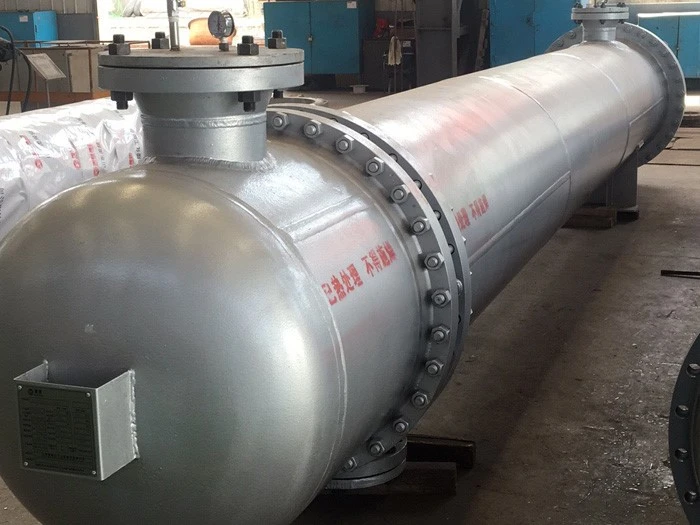
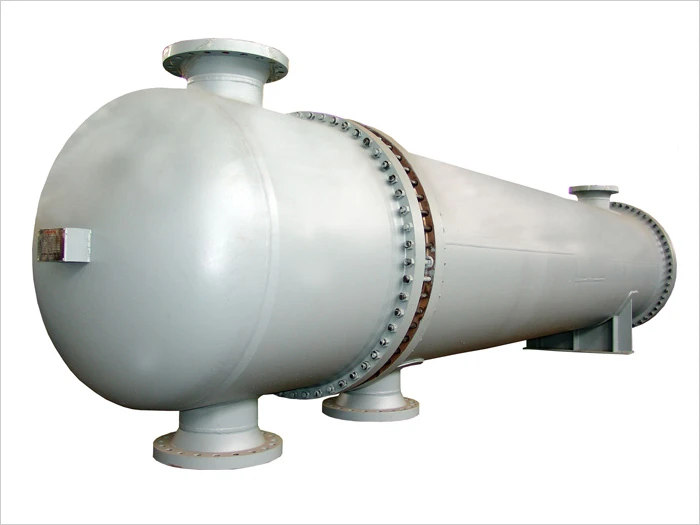
A floating head exchanger is a shell and tube unit in which one end of the tube bundle is free to move axially. The tubes expand and contract independently of the shell, so differential thermal growth does not load the tube-to-tubesheet joints. In fixed-tubesheet designs, that same growth produces cyclic stress at the joints and is a common cause of leakage.
The design also allows the bundle to be withdrawn for cleaning and inspection without cutting shell piping. The cost is mechanical complexity: the floating head requires an internal seal, and that seal is a wear point that must be inspectable and replaceable.
The floating head addresses thermal expansion. It does not address corrosion. That is the job of the material grade, which is where most reliability problems originate.
Stainless Steel Grades and Their Limits
The common grades are not interchangeable:
304 / 304L
General-purpose austenitic stainless. Adequate for many neutral and mildly corrosive fluids, but susceptible to chloride stress corrosion cracking above roughly 60 °C in the presence of chlorides, and to pitting in chloride-bearing water.
316 / 316L
adds molybdenum, improving resistance to pitting and crevice corrosion in chloride environments. Still susceptible to stress corrosion cracking at higher temperatures and chloride levels.
Duplex and super duplex
higher strength and substantially better chloride stress corrosion resistance than austenitic grades. Used where 316L is marginal, but subject to limits on temperature and to embrittlement if welded or heat-treated incorrectly.
Titanium
used for seawater and chloride-rich services where stainless grades are not adequate. Higher cost and different fabrication requirements.
Grade selection should follow from the actual fluid chemistry - chloride concentration, pH, oxygen content, temperature - and from published corrosion data for that combination. Selecting 316L by default and discovering chloride cracking in service is a common and avoidable failure mode.
Specification Considerations
Lorem ipsum dolor sit amet consectetur
Material grade against measured chemistry.
Obtain chloride content, pH, and temperature for both shell-side and tube-side fluids. Where the fluid composition can vary, specify for the worst credible case.
Differential expansion.
Calculate expected axial growth from design and operating temperatures using the expansion coefficients of the actual tube and shell materials. Confirm the floating travel allowance covers the full range, including startup, shutdown, and upset conditions.
Pressure and temperature ratings.
Confirm the rating covers maximum operating pressure and temperature, and check that the floating head seal is rated for the same conditions as the shell.
Fouling and cleaning method.
Confirm the design allows the cleaning method planned. A bundle that cannot be cleaned in practice will lose performance regardless of its material.
Seal and gasket materials.
These are often the first components to fail. Confirm they are compatible with the process fluid and rated for the operating temperature, and that spares are obtainable.
Installation and Operation
安装与运行
Support and alignment should follow the manufacturer's requirements. Misalignment loads the floating head seal and the tube-to-tubesheet joints.
支撑和对中应遵循制造商的要求.不对中会使浮头密封和管与管板连接处承受负载.
Thermal expansion allowances must be calculated, not assumed; a floating head that runs out of travel behaves like a fixed one.
热膨胀裕量必须计算,而非假设;行程耗尽的浮头其行为如同固定式.
Inspection should focus on the floating head seal, gaskets, tube-to-tubesheet welds, and tube wall thickness. Record wall thickness measurements so that corrosion rates can be calculated rather than estimated.
检查应重点关注浮头密封,垫片,管与管板焊缝以及管壁厚度.记录壁厚测量值,以便计算而非估算腐蚀速率.
Cleaning intervals should be set from observed fouling, not from a generic schedule. Fouling that is not removed accelerates under-deposit corrosion, which can perforate tubes even in a correctly selected grade.
清洗间隔应根据观察到的结垢情况设定,而非依据通用计划.未清除的污垢会加速垢下腐蚀,即使在正确选型的牌号中也可能使管子穿孔.
Limitations and Claims to Treat Carefully
Stainless steel is not universally corrosion-resistant, and the floating head does not make it so. Claims that a unit is "suitable for aggressive chemicals" should be checked against the specific grade's documented resistance to the specific fluid at the specific temperature. Stainless steel is recyclable, but that is a property of the material at end of life, not a reason to expect lower operating cost. Durability claims should be supported by corrosion allowance calculations and expected wall loss rates for the duty, not by general statements about material quality.
Conclusion
The reliability of a stainless steel floating head exchanger comes from two separate decisions: the floating head, which manages thermal expansion, and the material grade, which manages corrosion. Both must be matched to the actual duty. Specifying the grade against measured fluid chemistry, calculating expansion travel rather than assuming it, and inspecting the floating head seal and tube wall thickness on a defined schedule are what convert the design's potential into long service life. The design is a sound choice where the grade is correct; where the grade is chosen by default, the floating head will not compensate.