

Corrugated Tube Heat Exchangers: What Actually Matters in Selection
I have compared a lot of smooth-tube and corrugated-tube bundles over the years, and the sales pitch is always the same: better heat transfer, less fouling, smaller footprint. All three can be true. But the difference between a corrugated unit that pays back and one that becomes a pumping-cost problem usually comes down to the pressure drop and the fouling mechanism, not the corrugation itself. So instead of another overview, let me put down what actually decides the outcome.
-
shanghaiShenzhen Mandarin Oriental Hotel
What the Corrugation Is Actually Doing
A corrugated tube replaces the smooth wall with a wavy or helical profile. The corrugation does two things at once. It breaks up the laminar boundary layer near the wall, where the heat transfer resistance usually sits. And it promotes mixing across the flow.
In turbulent single-phase flow, that usually raises the overall heat transfer coefficient compared with a smooth bundle of the same size. The practical result is that you can sometimes meet the duty with fewer tubes, a shorter bundle, or a smaller shell.
The catch is pressure drop. Corrugation creates turbulence, and turbulence costs pumping power. If the allowable pressure drop is tight, the corrugated design can lose its advantage quickly. I have seen selections flip back to smooth tubes for exactly this reason, and it was the right call.
Where It Works, and Where It Does Not
Corrugated tubes make the most sense when the duty is high and the footprint is limited. That is the classic case, and it is where the technology earns its keep.
The actual gain depends on Reynolds number, fluid viscosity and density, Prandtl number, corrugation depth and pitch, which side the corrugation is on, and whether the service is single-phase or phase-change. Single-phase turbulent flow is the predictable case. Condensing and evaporating service is a different animal, because the phase-change mechanism dominates. Do not assume the same improvement carries over.
Fouling is where the marketing gets ahead of the engineering. Corrugated tubes can reduce fouling in cooling water, some hydrocarbon streams, and moderate particulate service, because the near-wall turbulence and shear stress make it harder for deposits to settle. But it is not a cure. It is the wrong choice when:
- The fluid is viscous and the corrugation does not generate enough wall shear
- The fouling mechanism is crystallization or polymerization
- The stream carries fibers or large solids that lodge in the corrugation
- Velocity is too low to keep the surface clean
What Actually Determines Whether the Unit Lasts
Datasheets give tube count and material-not what decides survival.
- Pressure drop on both sides. Most often skipped. Corrugation raises tube-side pressure drop, sometimes shell-side too. Check pump head against actual pressure drop or energy savings vanish.
- Corrugation geometry vs. cleaning. Deeper corrugation = more turbulence and heat transfer, but more places for solids to lodge and harder mechanical cleaning. Dirty service: geometry must suit the cleaning method, not just the thermal target.
- Tube-to-tubesheet joint and material. Usually welded or expanded-where leaks start. Material must suit both fluids; chlorides are the usual stainless failure mode. Same concern as any shell-and-tube unit; corrugation doesn't solve it.
- Fouling in actual service. Not general charts-specific fluid, concentration, temperature, velocity. Velocity too low: corrugation won't keep the surface clean, and it fouls faster than a smooth tube.
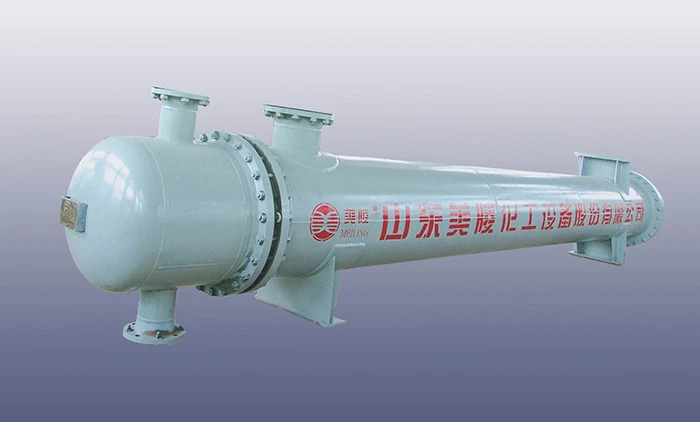
- Shell-side flow distribution. Compact bundles are sensitive to bypass and dead zones. Baffle design and nozzle detail matter as much as the tube surface.
Installation and Operation
Most corrugated tube problems I have seen were installation or operation problems, not design problems.
The bundle has to be aligned and the piping supported so it does not load the nozzles. The unit should be protected from thermal and pressure transients, because corrugated tubes are thinner-walled than smooth tubes in many designs and are more sensitive to water hammer. The cleaning method has to suit the corrugation, because a brush that works on a smooth tube may not clean a corrugated one.
Once in service, the routine matters more than the hardware. Monitor pressure drop and temperature approach on both sides. A rising pressure drop is usually the first sign of fouling. A drifting temperature approach means the unit is losing performance. Keep the velocity above the minimum for the service, because a unit that is turned down too far will foul. Clean on a defined interval based on actual operating data, not on a generic schedule.