

Hey there! As a supplier of Heat Exchanger Flanges, I often get asked about the alignment tolerance requirements for these important components. So, I thought I'd write this blog to shed some light on the topic and help you understand what's what when it comes to getting those flanges in tip - top shape.
First off, let's talk about why alignment tolerance matters. Heat exchangers are used in a whole bunch of industries, from chemical processing to power generation. Their main job is to transfer heat between two or more fluids, and the flanges play a crucial role in making sure everything is connected properly. If the flanges aren't aligned correctly, it can lead to all sorts of problems. Leaks are a big one. Even a small misalignment can cause gaps that allow fluids to escape, which is not only a waste but can also be dangerous, especially if the fluids are toxic or flammable.
Another issue is uneven stress distribution. Misaligned flanges can put extra stress on certain parts of the heat exchanger, which can lead to premature wear and tear. This means more maintenance, more downtime, and more money spent on repairs. So, getting the alignment right is super important for the long - term performance and reliability of the heat exchanger.
Now, what are the actual alignment tolerance requirements? Well, it depends on several factors. One of the main ones is the type of heat exchanger. For example, in a Shell and Tube Heat Exchanger Tube Bundle Assembly, the alignment of the flanges on the shell and the tube sheets needs to be pretty precise. The tubes in the bundle are usually very thin - walled, and any misalignment can cause the tubes to bend or crack over time. A general rule of thumb is that for shell - and - tube heat exchangers, the angular misalignment of the flanges should be within 1 degree. This might seem like a small margin, but it can make a huge difference in the performance of the heat exchanger.
The parallelism of the flanges is also crucial. Parallelism refers to how evenly the two flanges are aligned with each other. In most cases, the parallelism tolerance for heat exchanger flanges is around ±0.5 mm per 100 mm of flange diameter. So, if you have a flange with a diameter of 200 mm, the maximum allowable difference in parallelism between the two flanges should be around ±1 mm. This ensures that the gasket between the flanges is compressed evenly, which helps prevent leaks.
The center - to - center alignment of the bolt holes in the flanges is another important aspect. If the bolt holes don't line up properly, it can be really difficult to install the bolts, and even if you manage to force them in, it can cause uneven stress on the flanges. The tolerance for bolt - hole alignment is typically around ±0.5 mm. This means that the centers of the corresponding bolt holes in the two flanges should be within 0.5 mm of each other.
When it comes to the Heat Exchanger Channel Head, the alignment requirements are also quite strict. The channel head is where the fluid enters and exits the heat exchanger, and any misalignment can disrupt the flow of the fluid. This can reduce the efficiency of the heat exchanger and cause uneven heat transfer. The alignment tolerance for the flanges on the channel head is similar to that of other parts of the heat exchanger, but it may need to be even more precise in some high - pressure or high - temperature applications.
The Floating Head Assembly for Heat Exchanger has its own unique alignment challenges. The floating head is designed to move slightly to accommodate thermal expansion, but it still needs to be properly aligned with the rest of the heat exchanger. The alignment tolerance for the floating head flanges is usually a bit more forgiving than for fixed flanges, but it still needs to be within acceptable limits. A misaligned floating head can cause problems with the sealing of the heat exchanger and can also lead to excessive vibration, which can damage the tubes and other components.

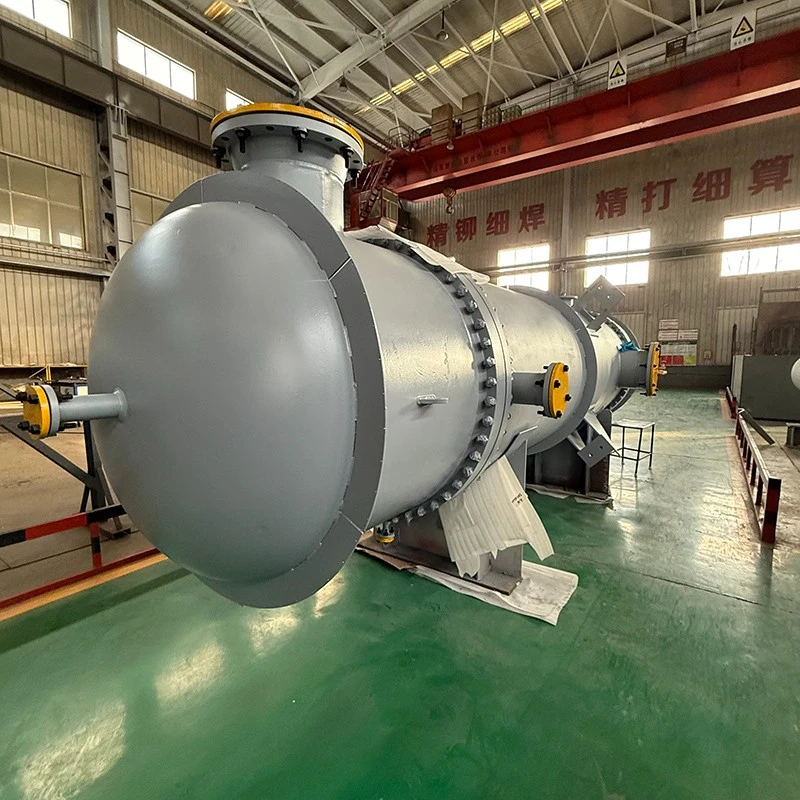
The Heat Exchanger Tube Sheet Plate is another critical part of the heat exchanger, and the alignment of its flanges is essential. The tube sheet holds the tubes in place, and any misalignment can cause the tubes to be installed at an angle, which can affect the flow of the fluid and the heat transfer efficiency. The alignment tolerance for the tube sheet flanges is similar to that of the shell flanges, with a focus on angular and parallel alignment.
As a supplier of Heat Exchanger Flanges, I know how important it is to meet these alignment tolerance requirements. That's why we use state - of - the - art manufacturing processes and quality control measures to ensure that our flanges are as precise as possible. We also provide detailed installation instructions to help our customers get the alignment right the first time.
If you're in the market for heat exchanger flanges, don't just settle for any old supplier. It's crucial to choose a supplier who understands the alignment tolerance requirements and can provide high - quality flanges that meet your specific needs. Whether you're dealing with a small - scale heat exchanger for a laboratory or a large - scale industrial heat exchanger, we've got you covered.
If you have any questions about our heat exchanger flanges or need help determining the right alignment tolerance for your application, feel free to reach out. We're here to make the process as easy as possible for you and to ensure that your heat exchanger runs smoothly and efficiently for years to come. So, don't hesitate to get in touch and start discussing your procurement needs with us.
References
- Incropera, F. P., DeWitt, D. P., Bergman, T. L., & Lavine, A. S. (2007). Fundamentals of Heat and Mass Transfer. John Wiley & Sons.
- Hewitt, G. F., Shires, G. L., & Bott, T. R. (1994). Process Heat Transfer. CRC Press.